

| Product Name | aeroTAP 3D USB G2 Camera | aeroTAP 3D USB Camera | aeroTAP 3D USB GS Camera |
|---|---|---|---|
| Product No | 20210903-001 | 20160627-001A ( Type A ) 20160627-001B ( Type B ) | 20190123-001 |
| Appearance | 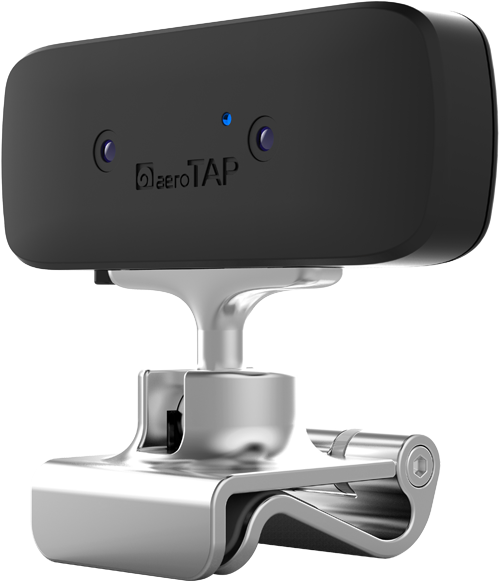 | 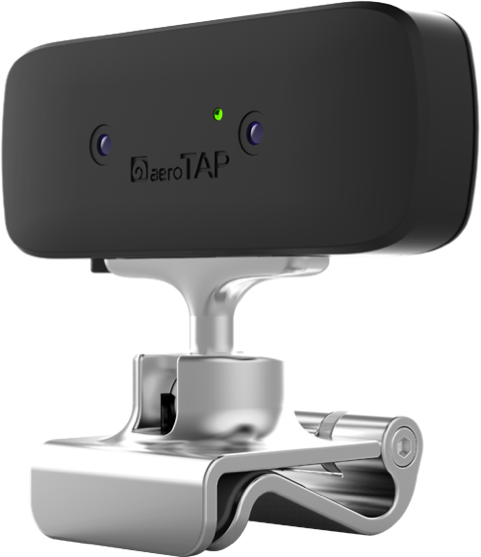 | 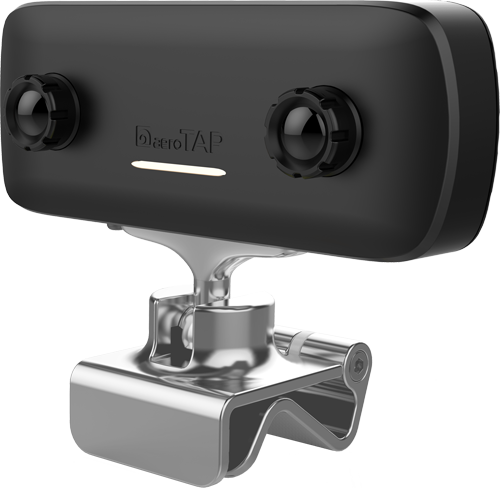 |
| Interface | USB2.0/3.2 Gen1 USB3.0 MicroB Female | USB2.0/3.0 USB3.0 MicroB Female | USB2.0/3.0 USB3.0 MicroB Female |
| UVC Video Device Name | aeroTAP 3D USB G2 Camera | aeroTAP 3D USB Camera | aeroTAP 3D USB GS Camera |
| Vendor ID | nextEDGE Technology | nextEDGE Technology | nextEDGE Technology |
| Camera Head dimension | 83x32x14mm | 83x32x14mm | 100x40x17mm(26mmレンズ) |
| Weight of Camera head | 24.3g | 23.8g | 31.8g |
| Sensor resolution, Size | OV9714 1296×812、1/4 | SOI1280x800、1/4 | ONSEMI AR0135、1/3 |
| FOV (DEG) | 60H/39V@HD 41H/31V@VGA 40H/30V@QVGA | 60H/39V@WVGA(640×400) 40H/30V@VGA 44H/33.7@QVGA | 96H/63V@HD 75H/60V@VGA |
| HW Post Process | Available | N/A | N/A |
| Measurable range of depth | 150mm ~ 3000mm | 200mm ~ 3000mm | 250mm ~ 4000mm |
| Resolution of depth images | 320×240, 640×480, 1280×720 | 320×240, 640×480, 640×400 (Wide angle*1) 8 bit | 640×480, 1280×720 |
| Stereo color image resolution | 320×240, 640×240, 640×480、1280×480, 1280×720, 2560×720 | 320×240, 640×240, 640×480, 1280×480 (Left and right image) | 640×480, 1280×480, 1280×720, 2560×720 |
| Power | 5V/500mA, 5V/600mA | 5V/500mA, 5V/600mA | 5V/500mA, 5V/800mA |
| Allowable temperature range | Work range: -30℃ ~ 80℃ Stable work range: 0℃ ~ 50℃ *No deformation of the module | Work range: -30℃ ~ 80℃ Stable work range: 0℃ ~ 50℃ *No deformation of the module | Work range: -30℃ ~ 80℃ Stable work range: 0℃ ~ 50℃ *No deformation of the module |
| Lens Type | /w IR Cut Filter | Type A (PID 100) /w IR cut filter *Recommended for aeroTAP evo Type B (PID 101) /wo IR cut Filter | Dual Band IR Cut Filter(0~650nm, 850nm) |
| Contents of Package | aeroTAP 3D USB G2 Camera Camera base USB3.0 1.5M cable | aeroTAP 3D Camera Camera base USB3.0 1.5M cable | aeroTAP 3D USB GS Camera Camera base USB3.0 1.5M cable |
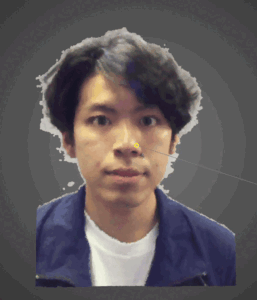
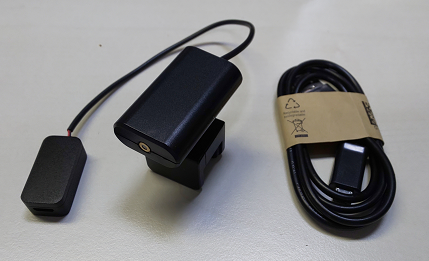
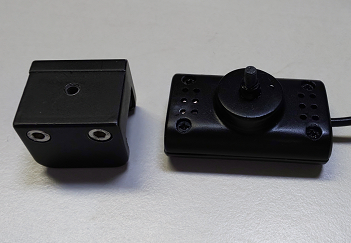
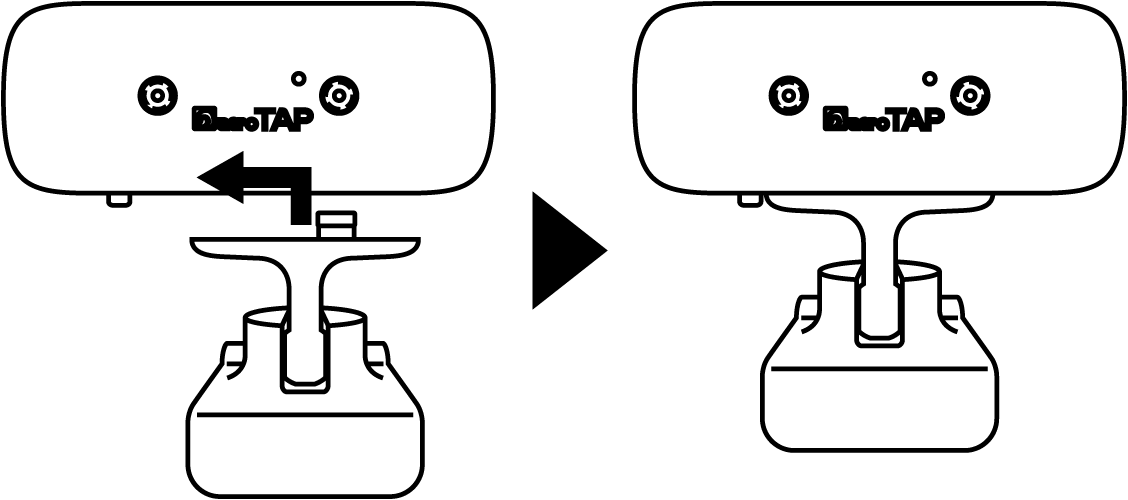 | Attaching the Camera BaseTo attach the camera base to the camera head, align the base as shown in the illustration on the left. Then slide the camera base to the left until it clicks securely into place. |
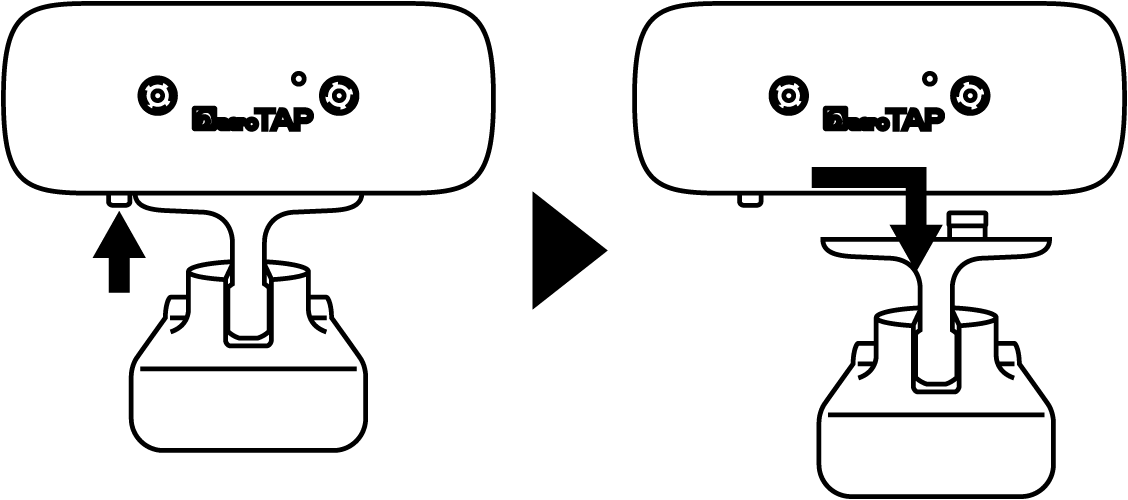 | Removing the Camera HeadTo remove the camera head, press and hold the release button located on the lower-left side of the camera head, then slide the camera base to the right to detach it. |
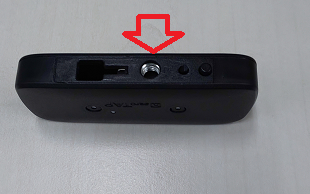 | The underside of the camera head features a standard tripod mount, allowing you to attach the camera to any compatible tripod. 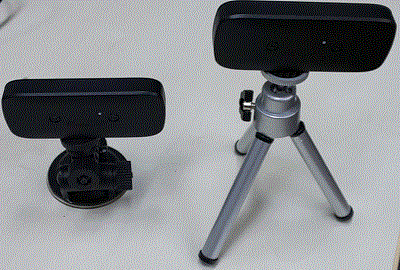 |
Designed for Real-World Applications
The aeroTAP 3D USB Camera is specifically designed for the aeroTAP Evo Touchless Interface, delivering reliable performance for practical, real-world applications.
Its compact, application-oriented design makes it ideal not only for touchless interfaces, but also for machine vision, 3D application development, robotics, AI, and computer vision projects. Built for both product development and commercial deployment, it provides the performance and flexibility required for a wide range of next-generation applications.
| QVGA Support | Optimized Resolution for Maximum PerformanceThe aeroTAP 2D USB Camera and aeroTAP 3D USB G2 Camera support QVGA and WVGA resolutions (640 × 400 or 640 × 360). For applications that do not require high-resolution images, lower resolutions provide significantly faster processing, reduce system load, and allow multiple cameras to operate simultaneously on the same USB bus. Of course, the cameras also support HD 720p at up to 60 FPS. But do you really need it? For many machine vision, touchless interface, and AI applications, lower resolutions deliver the ideal balance of performance, responsiveness, and system efficiency. |
| USB 2.0 Support | The aeroTAP 3D USB Camera supports USB 2.0 connectivity, making it ideal for Raspberry Pi and other single-board computer (SBC) platforms. |
Lightweight Camera Head | The aeroTAP 3D USB Camera features an ultra-lightweight camera head weighing just 24 g, while the aeroTAP 3D USB GS Camera weighs only 32 g. Their lightweight design makes them easy to integrate into robots, robotic arms, drones, AGVs, and other embedded or mobile systems where minimizing weight is essential. |
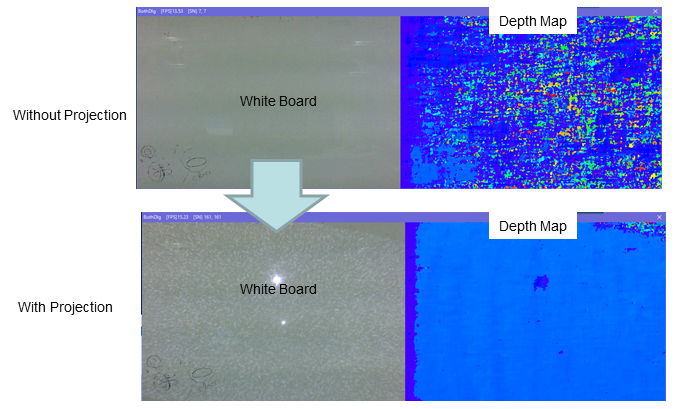
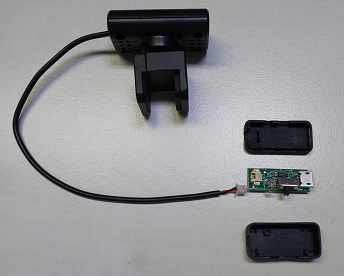
| DOE Projector | An optional DOE projector is available for applications that require it. Because the projector generates heat during operation, it is provided as a separate module rather than being integrated into the camera. |
| RAW Data | The aeroTAP 3D USB Camera provides direct access to the raw depth data generated by the camera’s onboard depth engine. Unlike many competing 3D cameras, it does not require GPU- or CPU-intensive post-processing to obtain usable depth data. Developers are free to implement only the post-processing algorithms their applications require. This approach significantly reduces CPU and GPU workload, improves overall application performance, and gives developers greater flexibility and control over the depth processing pipeline. |
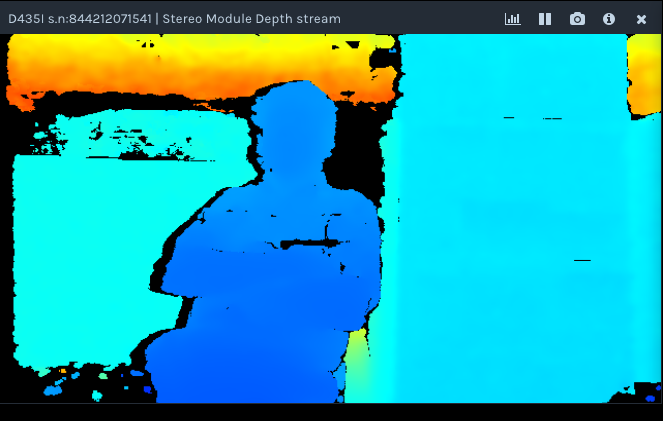
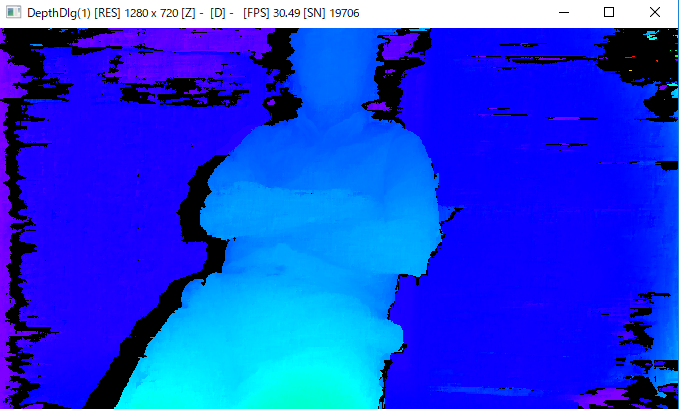
共にRAWデータ 1280×720 Depth Map
左がaeroTAP 3D GS、右がIntel D435iでの出力結果
カメラから1m程度離れた位置
| カメラヘッド部にカメラベースを取り付ける場合は、左のように、カメラベースを取り付けてから、 「カチ」と鳴るまで、カメラベースを左にスライドしてください。 |
| カメラヘッドを取り外す場合、カメラヘッド左下のボタンを押しながら、カメラベース を右にスライドして外します。 |
| カメラヘッド下部には、三脚用のネジ穴があります。これを利用して任意のカメラ三脚に固定することができます。 重要: 初期ロットカメラの三脚ネジが規格と違うものが含まれていました。ネジ交換に対応いたしますので、カメラを弊社サポートまでお問い合わせください。 |
aeroTAP 3D USBカメラは、aeroTAP evo タッチレスインターフェイス様にデザインされた3Dカメラです。実際のアプリケーションで必要な実用的なデザインで設計されています。マシンビジョンや3Dコンテンツの開 発にも十分利用できるための設計となっています。
| QVGA のサポート | aeroTAP 2D USB , aeroTAP 3D USB G2カメラは、QVGAおよびWVGA( 640×400、または 640×360 )解像度をサポートします。 もちろんHD720P高解像度で60FPSでの接続も可能です。でも本当に必要ですか? |
| USB 2.0のサポート | aeroTAP 3D USBカメラは、USB 2.0ポートに接続が可能です。Raspberry PiなどSBCなどでの利用に有効です。 |
| 軽量カメラヘッド | カメラヘッド部の重量は、aeroTAP 3D USBカメラで24g、aeroTAP 3D USB GSカメラで32gと超軽量です。ロボットなどへの装着が簡単になります。 |
| DOE Projector | 高温になる、DOEプロジェクターは別途オプションとして取り付け可能です。 |
| RAWデータ | カメラ内で計算された深度画像をRAWデータで取り込めます。 他社カメラである、GPU/CPUを大量に消費するポストプロセスは不要です。ご自身で必要に応じたPostProcess処理 が可能です。 これによりアプリケーションにかかる負荷が大幅に改善できます。 |